



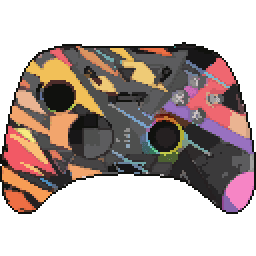
Fantech EOS Pro WGP15



Fantech EOS Pro WGP15 Input lag comparison
| # | Connection | Mode | LatencyAverage (ms) | Polling RateMedian (Hz) | Jitter | OSBuild ver. | FWTester ver. | |
|---|---|---|---|---|---|---|---|---|
| Button Latency GPDL | ||||||||
1 | Cable PRIMARY | XInput | 4.03 | 824.89 | 0.60 | Win 11 10.0.22631 | 1.4 2.1.8 | |
2 | Cable | Other | 11.4 | 201.81 | 1.78 | Win 11 10.0.22631 | 1.4 2.1.8 | |
3 | Dongle PRIMARY | XInput | 14.3 | 151.79 | 3.25 | Win 11 10.0.22631 | 1.4 2.1.8 | |
4 | Cable | Switch | 19.9 | 125 | 2.60 | Win 11 10.0.22631 | 1.4 2.1.8 | |
5 | Bluetooth | Switch | 19.2 | 157.78 | 3.92 | Win 11 10.0.22631 | 1.4 2.1.8 | |
6 | Bluetooth PRIMARY | XInput | 20.3 | 154.91 | 2.51 | Win 11 10.0.22631 | 1.4 2.1.8 | |
Latency
Our visualization focuses on Average Latency, presented as vertical bars to make comparing performance across different connection modes (Wired, Bluetooth, Dongle) instant and intuitive.
The chart differentiates between:
- Button Latency: How quickly the game registers a physical button press.
- Stick Latency: The delay in registering joystick movement (tested at 99% deflection).
Visualizing Stability (Jitter)
You may notice that the top portion of some bars is semi-transparent or "faded". This represents Jitter (instability):
- Solid Bar: Represents the stable, consistent average latency.
- Faded Top: Indicates the variance. A larger transparent area means higher jitter, implying the controller's response time fluctuates. A solid bar with little to no fading indicates a highly stable connection.
Deep Dive: Click the arrow to reveal Probability Distribution Charts. These show the exact breakdown of every input tested, displaying Probability (%) on the Y-axis and Latency (ms) on the X-axis.
Polling Rate vs. Latency
It is crucial to understand that Polling Rate and Latency are measured using two entirely different methodologies on our site:
- Latency (ms) is measured by the Prometheus 82 hardware. It captures the physical movement of the stick or button via hardware interrupts with microsecond precision. This is the "real-world" delay.
- Polling Rate (Hz) is measured via a Software Tool. It shows how often the OS receives reports from the USB stack.
Common Myth: A higher polling rate (like 8000 Hz) does not automatically guarantee lower latency if the controller's internal processing is slow. Conversely, a high polling rate on a chart might show fluctuations (e.g., 7800Hz instead of 8000Hz) due to OS jitter or CPU scheduling, which does not necessarily impact the hardware latency measured by the P82.
To test your own gamepad's polling rate, you can use our tool: Download Polling Rate Tester.
Testing Methods
Gamepadla ensures data integrity by combining three distinct testing methodologies:
-
Prometheus 82 (P82): Our gold standard. A custom-built hardware device that physically actuates buttons and sticks. It uses high-speed hardware interrupts to capture events, making it independent of the controller's polling rate. It provides an error margin of only ±1ms for buttons and sticks. View on GitHub.
-
GPDL Tester: An electrical monitoring tool for highly accurate button latency. While P82 simulates human-like mechanical movement, GPDL focuses on the electrical signal speed. View on GitHub.
-
Software Polling Test: A pure software diagnostic to check communication frequency. We use this to verify if a controller actually reaches its advertised specs (e.g., 1000Hz or 8000Hz) at the OS level. Download Software.
Note: By comparing hardware-level latency (P82) with software-level reports (Polling Test), we can identify if a controller has "fake" high polling rates or poorly optimized firmware.
Stick test of Fantech EOS Pro WGP15
Stick test results for Fantech EOS Pro WGP15 gamepad, by John Punch
Errors Panel
Inner Deadzone
The Inner Deadzone is the area around the center of the stick where small movements are not registered. This helps prevent stick drift or accidental inputs, but if the deadzone is too large, it can make aiming less precise, especially in games requiring fine control. We evaluate the Inner Deadzone based on how much you need to move the stick before it responds - the less movement required, the better.
The Fantech EOS Pro WGP15 has a moderate Inner Deadzone. You need to push the stick a bit more to get a response, which can make micro-movements less precise. This might be noticeable in games like shooters or platformers where small adjustments are key.
For comparison, many budget gamepads often have a moderate to large Inner Deadzone, while premium controllers typically aim for a slight or no deadzone for better precision.
Want to learn more? Check out our video explanation of how the Inner Deadzone works.
Outer Deadzone
The Outer Deadzone is the area near the edge of the stick's physical range where you are still deflecting it, but the system already registers the maximum 100% input. As a result, maximum speed (e.g., camera turn) is reached before the stick hits the physical gate. This narrows the effective range for precise aiming and can make edge control feel too sharp or twitchy. The smaller this zone, the better, as it allows you to use the entire physical range of the stick for precise control.
The Fantech EOS Pro WGP15 has a slight Outer Deadzone (0.6 mm). Although 100% input is reached slightly before the physical edge, this difference is minimal and unlikely to be noticeable during actual gameplay.
Per-stick breakdown for the Fantech EOS Pro WGP15: the left stick measures 0.6 mm, which corresponds to a slight Outer Deadzone, while the right stick measures 0.6 mm, which corresponds to a slight Outer Deadzone. This helps show whether the controller loses range evenly on both sticks or if one stick is noticeably weaker near full tilt.
Both sticks show the same measured Outer Deadzone, which suggests consistent edge behavior between movement and camera inputs.
For comparison, budget gamepads often have moderate to large Outer Deadzones, while premium controllers strive for minimal or no deadzone to maximize control.
Want to learn more? Check out our video explanation of how the Outer Deadzone works.
Stick Asymmetry
Stick Asymmetry measures the consistency of the joystick's response across different directions at partial deflection (~80%) using physical limiters (brackets). This reveals asymmetries that might be hidden by clamping at 100% deflection. A high asymmetry score indicates a problem where for the same physical movement, the reported coordinates are inconsistent. The lower the percentage, the more predictable the stick movements. Lower is better.
For the Fantech EOS Pro WGP15, the Stick Asymmetry is 19.6% for the left stick and 0.4% for the right stick. Higher values can lead to noticeable inconsistencies, potentially impacting aiming or movement in games.
Testing Methodology: It's crucial to note that this test is performed at partial stick deflection (~80%), using special physical limiters (brackets/clips). Testing at 100% deflection often hides asymmetries because the controller's output is clamped at the maximum value, artificially 'smoothing' the resulting shape. Our method reveals the true performance of the stick in the ranges most critical for gameplay. This precise approach was also utilized by Linus Tech Tips in their controller review.
For comparison, many budget gamepads show asymmetry levels above 30%, while high-end controllers typically stay below 10% for better uniformity.
Learn more about how different gamepads perform in the Stick Asymmetry test and how to conduct such a test in this article. You can learn how to test joystick asymmetry yourself from this video.
Circle Error
Circle Error evaluates how closely the stick’s movement follows a perfect circle. A high Circle Error means the path is more square-like, which can cause inconsistent speeds when moving diagonally - your character might move faster or slower than expected. The lower the percentage, the better, as it ensures smooth, uniform movement in all directions.
For the Fantech EOS Pro WGP15, the Circle Error is 0.1% for the left stick and 0.1% for the right stick. This is an excellent result, providing smooth, natural diagonal movement similar to premium controllers.
For comparison, budget gamepads often have Circle Errors above 12%, resulting in 'square' feeling sticks, while high-quality ones aim for under 8% for better smoothness.
Want to learn more? Check out our video explanation of how Circle Error impacts performance.
Resolution (Stick Bitness)
Stick Bitness measures the precision of the joystick’s analog input, similar to bit depth in audio. Higher bitness means more distinct positions the stick can register, leading to smoother and more accurate control. Lower bitness can result in 'stepping' or less fluid movement, especially noticeable in slow, precise actions like aiming.
Unlike declared digital resolution, our True Bitness metric is derived from actual physical stick movement, reflecting the usable positions the stick can produce in practice.
For the Fantech EOS Pro WGP15, the movement-based True Bitness is 9.4 bits on both sticks. This is moderate precision. It is generally adequate for most games, though some stepping might be noticeable in high-precision aiming.
This corresponds to a measured Step Resolution of 0.00296 on the left stick and 0.00296 on the right. In practical terms, this means the gamepad can register about 338 individual steps from the center to the edge (SFC) on the left stick, and 338 SFC on the right.
For comparison, many budget gamepads have around 8 bits, while premium ones often exceed 10 bits for superior accuracy.
Want to learn more? Check out our video explanation of how Stick Bitness affects control. It is important to note that the video specifies the resolution of the stick, not the bit depth; the higher the bit depth, the higher the resolution.
Center Error (Stick Centering)
Center Error (also referred to as Stick Centering) measures how accurately the joystick returns to its neutral (center) position after you release it. A low Center Error prevents stick drift - a common issue where your character or camera moves slightly in a game, even when you're not touching the stick. The lower the percentage, the better the centering, and the less likely you are to experience drift.
For the Fantech EOS Pro WGP15, the Center Error is 0% for the left joystick and 0% for the right stick. This is an excellent result. The sticks return almost perfectly to the center, which minimizes the risk of stick drift. However, note that this natural centering is currently masked by the controller's built-in inner deadzone.
This test methodology intentionally employs a more rigorous approach by implementing small-angle deflection and release, which produces the most challenging conditions for stick re-centering. This technique differs from the conventional maximum-deflection method where the stick is pulled to its full range and released, as small-angle deflection better simulates the micro-adjustments typically executed during actual gameplay scenarios, providing more representative data on potential stick drift occurrence during normal use.
Warning: These ideal centering values may be masked by an Inner Dead Zone ('med').
Want to learn more? Check out our video explanation of how Center Error works.
Cardinal Snapping
Cardinal Snapping (sometimes referred to as Axis Magnet) is a form of stick processing where the controller's output artificially 'snaps' or clings to the cardinal (horizontal and vertical) axes when the stick passes close to them. While this can make pure horizontal or vertical movements feel perfectly straight, it distorts the natural movement path and makes diagonal aiming or fine steering less predictable.
The Fantech EOS Pro WGP15 shows no Cardinal Snapping. This means the stick does not artificially cling to the horizontal or vertical axes, preserving your real movement path for consistent aiming and natural analog control.
Want to learn more? Check out our video explanation of how Cardinal Snapping affects stick behavior.
Disclaimer
We tested the Fantech EOS Pro WGP15 gamepad using a single unit, so keep in mind that other units of this model might perform slightly better or worse. In most cases, these differences are minor and shouldn’t affect your experience significantly. The results were obtained with the Stick Tracer program, and some values might vary if you use different software or testing methods.
Testing conditions, such as the gamepad’s firmware version (FW: 1.4) or connection type, can also influence the results. If you have this gamepad, we’d love for you to share your own test results! This will help us build a more comprehensive picture of the Fantech EOS Pro WGP15’s performance across different units.
Full test results can be viewed on the test page.
Stick Movement Linearity Test
Linearity test for Fantech EOS Pro WGP15 • Firmware 1.4 • Stick Analyzer 2.0.3.0 • Dongle connection • Xinput mode • Manual Input. Uploaded, by Leonardo Santoso
Comment: 1000Hz
Stick Motion Resolution Analysis
This test evaluates the analog stick's ability to register unique positions during a controlled, linear motion from the center to the edge of its range. The analysis was conducted using the Line program, ensuring precise measurement of the stick's resolution, linearity, and response characteristics.
Data Points
Data Points represents the total number of coordinates captured during the stick's movement from the center to the edge. This includes both the stable analog positions and any points affected by signal jitter, noise, or active processing. In this test, we recorded 2840 data points, which is an excellent result that indicates very precise stick movement registration.
Note on variability: This count is not a fixed hardware limitation. It represents the data collected during this specific 8.14-second test. The total number of points depends heavily on:
- Polling Rate: Controllers with higher polling rates (e.g., 1000 Hz) transmit updates more frequently, yielding more data points in the same time frame.
- Movement Speed: Moving the stick slower increases the test duration, allowing the software to collect many more samples. For example, during specialized high-precision bit-depth tests where the stick is moved extremely slowly, the same controller might record several times more points.
To evaluate the actual physical resolution of the stick, it is essential to also look at the Straight Points metric below, which filters out signal noise and duplicates.
Straight Points
Straight Points represent the number of clean, unique positions detected after filtering out duplicates, tremor, and signal processing artifacts during stick movement. This filtering process identifies points that follow a consistently increasing trajectory, representing the true analog steps of the stick. The test registered 2113 straight points. This is an excellent result, indicating very smooth and precise stick movement.
Similar to Data Points, the count of Straight Points is variable and scales with the test duration and controller polling rate. Rather than representing a fixed hardware limit, it shows how many stable, distinct coordinates the controller successfully reported during this specific movement sequence. A higher number under similar conditions indicates a smoother, more detailed transition from center to edge.
Resolution
Resolution in this test refers to two complementary measurements:
Total Resolution: 2246 positions across the entire stick range. This number represents how many distinct positions the analog stick can detect from center to edge. This might result in somewhat stepped or less smooth movement
Step Resolution: 0.00045 per increment. This value represents the average size of each step between detected positions (smaller values indicate higher precision). It determines how smoothly the stick can transition between positions, which directly impacts precise aiming and subtle movements in games.
A high total resolution combined with a low step resolution provides the optimal experience for precise control in games requiring fine adjustments.
Tremor
Tremor percentage represents the amount of signal variation and micro-jitter that occurs between the physical movement of the stick and the final output. It is calculated as the percentage of data points that do not follow a strictly increasing trajectory. The test measured 25.6% tremor. This represents typical noise levels in stick signal processing.
While lower tremor indicates a cleaner raw signal, its presence does not significantly impact real-world gameplay. Different controllers have different signal processing characteristics. Notably, an artificially low tremor (0%) often indicates aggressive digital filtering or smoothing implemented by the manufacturer. While this makes the signal look clean, it can introduce response delay (input lag). Therefore, a moderate level of tremor is typical and often preferred over heavy filtering that degrades responsiveness.
Linearity
Linearity represents how closely the stick movement follows an ideal linear path. It's calculated as 100% minus the nonlinearity percentage, where nonlinearity measures deviations from a perfectly straight line. The test measured 92.3% linearity. This indicates excellent stick linearity, providing consistent and predictable movement.
At the same time, a gamepad stick is not a perfectly linear mechanical system. The stick rotates around a pivot, the cap travels along an arc, and the sensor reads that rotational movement rather than a truly straight physical path. Because of this, a graph that bends slightly below the ideal straight line is often normal. In many cases, that lower arc-like bow reflects the real mechanics of the stick more faithfully than a response that was tuned mainly to look perfectly straight in this specific test.
What matters most is that the movement remains smooth, progressive, and predictable. A mild, even downward curve can be acceptable or even technically more natural, while sharp dips, waviness, uneven acceleration, or asymmetry still indicate worse response quality.
Test Duration
The time taken to complete the test was 8.14 seconds. This is an optimal test duration, providing reliable results. For the most accurate results, the stick movement should be smooth and controlled, typically taking between 5 and 8 seconds.
Linearity test for Fantech EOS Pro WGP15 • Firmware 1.4 • Stick Analyzer 2.0.3.0 • Dongle connection • Xinput mode • Manual Input. Uploaded, by Leonardo Santoso
Comment: 1000Hz
Stick Motion Resolution Analysis
This test evaluates the analog stick's ability to register unique positions during a controlled, linear motion from the center to the edge of its range. The analysis was conducted using the Line program, ensuring precise measurement of the stick's resolution, linearity, and response characteristics.
Data Points
Data Points represents the total number of coordinates captured during the stick's movement from the center to the edge. This includes both the stable analog positions and any points affected by signal jitter, noise, or active processing. In this test, we recorded 2958 data points, which is an excellent result that indicates very precise stick movement registration.
Note on variability: This count is not a fixed hardware limitation. It represents the data collected during this specific 8.39-second test. The total number of points depends heavily on:
- Polling Rate: Controllers with higher polling rates (e.g., 1000 Hz) transmit updates more frequently, yielding more data points in the same time frame.
- Movement Speed: Moving the stick slower increases the test duration, allowing the software to collect many more samples. For example, during specialized high-precision bit-depth tests where the stick is moved extremely slowly, the same controller might record several times more points.
To evaluate the actual physical resolution of the stick, it is essential to also look at the Straight Points metric below, which filters out signal noise and duplicates.
Straight Points
Straight Points represent the number of clean, unique positions detected after filtering out duplicates, tremor, and signal processing artifacts during stick movement. This filtering process identifies points that follow a consistently increasing trajectory, representing the true analog steps of the stick. The test registered 2182 straight points. This is an excellent result, indicating very smooth and precise stick movement.
Similar to Data Points, the count of Straight Points is variable and scales with the test duration and controller polling rate. Rather than representing a fixed hardware limit, it shows how many stable, distinct coordinates the controller successfully reported during this specific movement sequence. A higher number under similar conditions indicates a smoother, more detailed transition from center to edge.
Resolution
Resolution in this test refers to two complementary measurements:
Total Resolution: 2320 positions across the entire stick range. This number represents how many distinct positions the analog stick can detect from center to edge. This might result in somewhat stepped or less smooth movement
Step Resolution: 0.00043 per increment. This value represents the average size of each step between detected positions (smaller values indicate higher precision). It determines how smoothly the stick can transition between positions, which directly impacts precise aiming and subtle movements in games.
A high total resolution combined with a low step resolution provides the optimal experience for precise control in games requiring fine adjustments.
Tremor
Tremor percentage represents the amount of signal variation and micro-jitter that occurs between the physical movement of the stick and the final output. It is calculated as the percentage of data points that do not follow a strictly increasing trajectory. The test measured 26.2% tremor. This represents typical noise levels in stick signal processing.
While lower tremor indicates a cleaner raw signal, its presence does not significantly impact real-world gameplay. Different controllers have different signal processing characteristics. Notably, an artificially low tremor (0%) often indicates aggressive digital filtering or smoothing implemented by the manufacturer. While this makes the signal look clean, it can introduce response delay (input lag). Therefore, a moderate level of tremor is typical and often preferred over heavy filtering that degrades responsiveness.
Linearity
Linearity represents how closely the stick movement follows an ideal linear path. It's calculated as 100% minus the nonlinearity percentage, where nonlinearity measures deviations from a perfectly straight line. The test measured 92.8% linearity. This indicates excellent stick linearity, providing consistent and predictable movement.
At the same time, a gamepad stick is not a perfectly linear mechanical system. The stick rotates around a pivot, the cap travels along an arc, and the sensor reads that rotational movement rather than a truly straight physical path. Because of this, a graph that bends slightly below the ideal straight line is often normal. In many cases, that lower arc-like bow reflects the real mechanics of the stick more faithfully than a response that was tuned mainly to look perfectly straight in this specific test.
What matters most is that the movement remains smooth, progressive, and predictable. A mild, even downward curve can be acceptable or even technically more natural, while sharp dips, waviness, uneven acceleration, or asymmetry still indicate worse response quality.
Test Duration
The time taken to complete the test was 8.39 seconds. This is an optimal test duration, providing reliable results. For the most accurate results, the stick movement should be smooth and controlled, typically taking between 5 and 8 seconds.
Fantech EOS Pro WGP15 specifications
Internal
External
Connection
Software
Platforms


User comments
Can anyone confirm, the b button is actually mapped to the abxy button on the Fantech EOS Pro WGP15?
Yes, the B button is mapped to the ABXY buttons. You can also press the left side of the turbo button and R3 together for additional functionality.
I'm impressed by the Fantech EOS Pro WGP15's customizable button mapping, which has greatly enhanced my gaming experience, especially with MOBA games where quick button swaps make a big difference.
I was surprised to learn that double tapping the Capture button on the Fantech EOS PRO WGP15 actually switches the D-pad and Left Analog Stick, a feature not mentioned in the manual.