



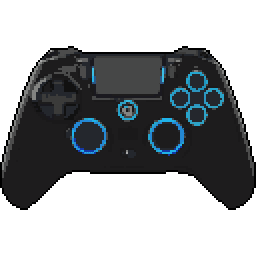
QRD Spark N5


QRD Spark N5 Input lag comparison
| # | Connection | Mode | LatencyAverage (ms) | Polling RateMedian (Hz) | Jitter | OSBuild ver. | FWTester ver. | |
|---|---|---|---|---|---|---|---|---|
| Polling Rate | ||||||||
1 | Bluetooth | Sony | 4.69 | 250 | 2.87 | Win 10 | --- |  |
Polling Rate 2 ms 4.69 ms 28.01 ms 2.87 ms 250 Hz 209.07 Hz Note: This test are based on polling rate and do not represent actual input-lag. |
Latency
Our visualization focuses on Average Latency, presented as vertical bars to make comparing performance across different connection modes (Wired, Bluetooth, Dongle) instant and intuitive.
The chart differentiates between:
- Button Latency: How quickly the game registers a physical button press.
- Stick Latency: The delay in registering joystick movement (tested at 99% deflection).
Visualizing Stability (Jitter)
You may notice that the top portion of some bars is semi-transparent or "faded". This represents Jitter (instability):
- Solid Bar: Represents the stable, consistent average latency.
- Faded Top: Indicates the variance. A larger transparent area means higher jitter, implying the controller's response time fluctuates. A solid bar with little to no fading indicates a highly stable connection.
Deep Dive: Click the arrow to reveal Probability Distribution Charts. These show the exact breakdown of every input tested, displaying Probability (%) on the Y-axis and Latency (ms) on the X-axis.
Polling Rate vs. Latency
It is crucial to understand that Polling Rate and Latency are measured using two entirely different methodologies on our site:
- Latency (ms) is measured by the Prometheus 82 hardware. It captures the physical movement of the stick or button via hardware interrupts with microsecond precision. This is the "real-world" delay.
- Polling Rate (Hz) is measured via a Software Tool. It shows how often the OS receives reports from the USB stack.
Common Myth: A higher polling rate (like 8000 Hz) does not automatically guarantee lower latency if the controller's internal processing is slow. Conversely, a high polling rate on a chart might show fluctuations (e.g., 7800Hz instead of 8000Hz) due to OS jitter or CPU scheduling, which does not necessarily impact the hardware latency measured by the P82.
To test your own gamepad's polling rate, you can use our tool: Download Polling Rate Tester.
Testing Methods
Gamepadla ensures data integrity by combining three distinct testing methodologies:
-
Prometheus 82 (P82): Our gold standard. A custom-built hardware device that physically actuates buttons and sticks. It uses high-speed hardware interrupts to capture events, making it independent of the controller's polling rate. It provides an error margin of only ±1ms for buttons and sticks. View on GitHub.
-
GPDL Tester: An electrical monitoring tool for highly accurate button latency. While P82 simulates human-like mechanical movement, GPDL focuses on the electrical signal speed. View on GitHub.
-
Software Polling Test: A pure software diagnostic to check communication frequency. We use this to verify if a controller actually reaches its advertised specs (e.g., 1000Hz or 8000Hz) at the OS level. Download Software.
Note: By comparing hardware-level latency (P82) with software-level reports (Polling Test), we can identify if a controller has "fake" high polling rates or poorly optimized firmware.
Stick test of QRD Spark N5
Stick Movement Linearity Test
Linearity test for QRD Spark N5 • Firmware 2.5.97.3 • Stick Analyzer 2.0.3.0 • Cable connection • Ps4 mode • Manual Input. Uploaded, by Rafael Rodrigues (Nismo.)
Stick Motion Resolution Analysis
This test evaluates the analog stick's ability to register unique positions during a controlled, linear motion from the center to the edge of its range. The analysis was conducted using the Line program, ensuring precise measurement of the stick's resolution, linearity, and response characteristics.
Data Points
Data Points represents the total number of coordinates captured during the stick's movement from the center to the edge. This includes both the stable analog positions and any points affected by signal jitter, noise, or active processing. In this test, we recorded 121 data points, which is a good result that ensures comfortable gameplay.
Note on variability: This count is not a fixed hardware limitation. It represents the data collected during this specific 8.77-second test. The total number of points depends heavily on:
- Polling Rate: Controllers with higher polling rates (e.g., 1000 Hz) transmit updates more frequently, yielding more data points in the same time frame.
- Movement Speed: Moving the stick slower increases the test duration, allowing the software to collect many more samples. For example, during specialized high-precision bit-depth tests where the stick is moved extremely slowly, the same controller might record several times more points.
To evaluate the actual physical resolution of the stick, it is essential to also look at the Straight Points metric below, which filters out signal noise and duplicates.
Straight Points
Straight Points represent the number of clean, unique positions detected after filtering out duplicates, tremor, and signal processing artifacts during stick movement. This filtering process identifies points that follow a consistently increasing trajectory, representing the true analog steps of the stick. The test registered 121 straight points. This is an excellent result, indicating very smooth and precise stick movement.
Similar to Data Points, the count of Straight Points is variable and scales with the test duration and controller polling rate. Rather than representing a fixed hardware limit, it shows how many stable, distinct coordinates the controller successfully reported during this specific movement sequence. A higher number under similar conditions indicates a smoother, more detailed transition from center to edge.
Resolution
Resolution in this test refers to two complementary measurements:
Total Resolution: 127 positions across the entire stick range. This number represents how many distinct positions the analog stick can detect from center to edge. This might result in somewhat stepped or less smooth movement
Step Resolution: 0.00784 per increment. This value represents the average size of each step between detected positions (smaller values indicate higher precision). It determines how smoothly the stick can transition between positions, which directly impacts precise aiming and subtle movements in games.
A high total resolution combined with a low step resolution provides the optimal experience for precise control in games requiring fine adjustments.
Tremor
Tremor percentage represents the amount of signal variation and micro-jitter that occurs between the physical movement of the stick and the final output. It is calculated as the percentage of data points that do not follow a strictly increasing trajectory. The test measured 0.0% tremor. This indicates very stable stick movement with minimal noise in signal processing.
While lower tremor indicates a cleaner raw signal, its presence does not significantly impact real-world gameplay. Different controllers have different signal processing characteristics. Notably, an artificially low tremor (0%) often indicates aggressive digital filtering or smoothing implemented by the manufacturer. While this makes the signal look clean, it can introduce response delay (input lag). Therefore, a moderate level of tremor is typical and often preferred over heavy filtering that degrades responsiveness.
Linearity
Linearity represents how closely the stick movement follows an ideal linear path. It's calculated as 100% minus the nonlinearity percentage, where nonlinearity measures deviations from a perfectly straight line. The test measured 88.8% linearity. This indicates excellent stick linearity, providing consistent and predictable movement.
At the same time, a gamepad stick is not a perfectly linear mechanical system. The stick rotates around a pivot, the cap travels along an arc, and the sensor reads that rotational movement rather than a truly straight physical path. Because of this, a graph that bends slightly below the ideal straight line is often normal. In many cases, that lower arc-like bow reflects the real mechanics of the stick more faithfully than a response that was tuned mainly to look perfectly straight in this specific test.
What matters most is that the movement remains smooth, progressive, and predictable. A mild, even downward curve can be acceptable or even technically more natural, while sharp dips, waviness, uneven acceleration, or asymmetry still indicate worse response quality.
Test Duration
The time taken to complete the test was 8.77 seconds. This is an optimal test duration, providing reliable results. For the most accurate results, the stick movement should be smooth and controlled, typically taking between 5 and 8 seconds.
Linearity test for QRD Spark N5 • Firmware 2.5.97.3 • Stick Analyzer 2.0.3.0 • Cable connection • Ps4 mode • Manual Input. Uploaded, by Rafael Rodrigues (Nismo.)
Stick Motion Resolution Analysis
This test evaluates the analog stick's ability to register unique positions during a controlled, linear motion from the center to the edge of its range. The analysis was conducted using the Line program, ensuring precise measurement of the stick's resolution, linearity, and response characteristics.
Data Points
Data Points represents the total number of coordinates captured during the stick's movement from the center to the edge. This includes both the stable analog positions and any points affected by signal jitter, noise, or active processing. In this test, we recorded 121 data points, which is a good result that ensures comfortable gameplay.
Note on variability: This count is not a fixed hardware limitation. It represents the data collected during this specific 6.02-second test. The total number of points depends heavily on:
- Polling Rate: Controllers with higher polling rates (e.g., 1000 Hz) transmit updates more frequently, yielding more data points in the same time frame.
- Movement Speed: Moving the stick slower increases the test duration, allowing the software to collect many more samples. For example, during specialized high-precision bit-depth tests where the stick is moved extremely slowly, the same controller might record several times more points.
To evaluate the actual physical resolution of the stick, it is essential to also look at the Straight Points metric below, which filters out signal noise and duplicates.
Straight Points
Straight Points represent the number of clean, unique positions detected after filtering out duplicates, tremor, and signal processing artifacts during stick movement. This filtering process identifies points that follow a consistently increasing trajectory, representing the true analog steps of the stick. The test registered 121 straight points. This is an excellent result, indicating very smooth and precise stick movement.
Similar to Data Points, the count of Straight Points is variable and scales with the test duration and controller polling rate. Rather than representing a fixed hardware limit, it shows how many stable, distinct coordinates the controller successfully reported during this specific movement sequence. A higher number under similar conditions indicates a smoother, more detailed transition from center to edge.
Resolution
Resolution in this test refers to two complementary measurements:
Total Resolution: 127 positions across the entire stick range. This number represents how many distinct positions the analog stick can detect from center to edge. This might result in somewhat stepped or less smooth movement
Step Resolution: 0.00784 per increment. This value represents the average size of each step between detected positions (smaller values indicate higher precision). It determines how smoothly the stick can transition between positions, which directly impacts precise aiming and subtle movements in games.
A high total resolution combined with a low step resolution provides the optimal experience for precise control in games requiring fine adjustments.
Tremor
Tremor percentage represents the amount of signal variation and micro-jitter that occurs between the physical movement of the stick and the final output. It is calculated as the percentage of data points that do not follow a strictly increasing trajectory. The test measured 0.0% tremor. This indicates very stable stick movement with minimal noise in signal processing.
While lower tremor indicates a cleaner raw signal, its presence does not significantly impact real-world gameplay. Different controllers have different signal processing characteristics. Notably, an artificially low tremor (0%) often indicates aggressive digital filtering or smoothing implemented by the manufacturer. While this makes the signal look clean, it can introduce response delay (input lag). Therefore, a moderate level of tremor is typical and often preferred over heavy filtering that degrades responsiveness.
Linearity
Linearity represents how closely the stick movement follows an ideal linear path. It's calculated as 100% minus the nonlinearity percentage, where nonlinearity measures deviations from a perfectly straight line. The test measured 95.5% linearity. This indicates excellent stick linearity, providing consistent and predictable movement.
At the same time, a gamepad stick is not a perfectly linear mechanical system. The stick rotates around a pivot, the cap travels along an arc, and the sensor reads that rotational movement rather than a truly straight physical path. Because of this, a graph that bends slightly below the ideal straight line is often normal. In many cases, that lower arc-like bow reflects the real mechanics of the stick more faithfully than a response that was tuned mainly to look perfectly straight in this specific test.
What matters most is that the movement remains smooth, progressive, and predictable. A mild, even downward curve can be acceptable or even technically more natural, while sharp dips, waviness, uneven acceleration, or asymmetry still indicate worse response quality.
Test Duration
The time taken to complete the test was 6.02 seconds. This is an optimal test duration, providing reliable results. For the most accurate results, the stick movement should be smooth and controlled, typically taking between 5 and 8 seconds.
QRD Spark N5 specifications
Internal
External
Features
Connection
Software
Platforms


User comments
I've had the QRD Spark for a while now and it's been a mixed experience - the dead zone is quite noticeable and can be frustrating at times, especially for analog stick sensitivity.
Maybe I'm a bit late, but do not upgrade over v2.5.97.3 of the firmware. While some new interesting things were added later, indeed that outer deadzone on the sticks is god awful. You can find that version here: https://qrdgame.com/blogs/qrd-spark-n5-update/qrd-sparkn5-v2-5-97-3-version-release-notes
I can relate; the analog stick on the QRD Spark is quite poor. The dead zone makes it frustrating to use, especially for precision control.